The mid-range San Diego remodel usually lands on this floor fight: luxury vinyl plank or tile. You cook, you spill, you stand for a long prep, and late-day sun hits the west glass. The better pick matches your slab, your condo stack, and the way this kitchen actually gets used.
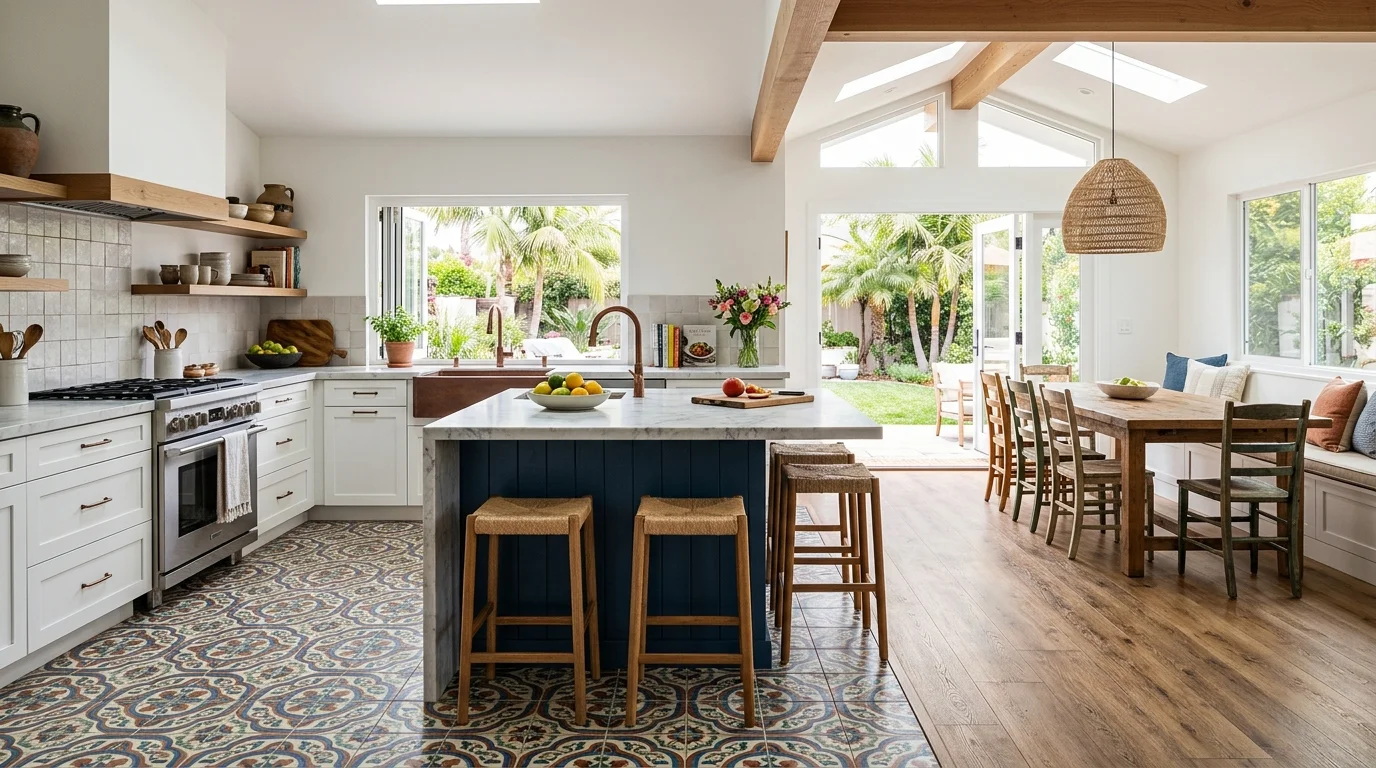
Water, heat and the dishwasher leak test
A kitchen floor fails at 11 p.m. The dishwasher weeps. The ice-maker line drips. Rain blows under a slider in Ocean Beach or Imperial Beach. That is the real LVP vs tile kitchen floor test, and it is local.
Tile as a body does not drink a spill the way unfinished wood does. The grout is the gap. Standing water can still move through grout into the substrate if the floor system was not built for wet work. Light grout in a busy cook’s kitchen also stains. Darker grout and a careful joint design reduce that daily fight. Confirm grout type and any sealing steps with the installer. Treat grout as part of the floor, not a color you pick last.
Luxury vinyl plank kitchen floors are often labeled water-resistant or waterproof. Treat those words as a claim to verify. Ask for the product spec sheet. Confirm the core, the wear layer, and what the maker says about standing water, steam, and water that gets under a floating plank. Kitchens punish seams: dishwasher kick space, fridge line, sink base, and the track at a patio door. If moisture sits under a floating floor, you can get odor, movement, or a pull-up. Glue-down systems behave differently at the edges. The spec sheet and the wet-edge details decide the outcome.
Heat is the second kitchen test. A roasting pan set on the floor. An open oven. A slow cooker parked while you clear a counter. Fired tile as a material handles that kind of contact. Vinyl can scuff, soften, or discolor if a hot object sits on it. Confirm heat limits on the sheet. A wood-look plank still has to live next to a range.
South Bay and East County kitchens often sit on slab. A leak pools on concrete until someone sees it. A Mission Valley second-story condo puts that same leak over a neighbor. Either material can work in both places. The installer still has to treat the wet edges as the real job.
If you are already leaning tile, porcelain and ceramic are different bodies. Read our porcelain vs ceramic tile kitchen guide before you lock a product.
What each floor feels like underfoot
Tile is hard and cool. In a Chula Vista or El Cajon summer that can feel like a gift at noon. At 6 a.m. in a coastal condo, bare feet notice the chill. LVP has a little give. People who stand at a peninsula for a long cook usually feel that difference first. If you want the best kitchen flooring San Diego kitchens can live with day after day, start with how long you stand, then look at the sample board.
Sound follows the same split. Tile clicks. Open plans in North Park or Mission Hills throw that sound around unless rugs and soft surfaces break it up. LVP is quieter underfoot when the underlayment matches the product. Too-thick underlayment can stress click-lock joints. Follow the maker’s underlayment limits. The thickest roll on the shelf is a poor default.
Pets and kids change the feel test. Tile does not dent from a chair leg. It can chip if a cast-iron pan lands just right. LVP takes a drop with less drama, then shows dents from fridge feet, table legs, and point loads. Felt pads help. They still leave vinyl as vinyl.
A dropped mug is the honest kitchen test. On tile, the mug often loses. On LVP, the mug may survive and the plank may take a mark. One path is a chipped tile and a grout repair. The other is a plank swap. Pick the repair you would rather live with.
Second-story condos in Mission Valley add a neighbor below. Impact noise matters more than the sample board suggests. Ask the flooring pro how the assembly handles sound in a stacked unit. A hallway sample will not tell you.
For a wider material map, use our kitchen flooring buying guide. This page stays on the tile vs vinyl kitchen floor decision.
Subfloor, height transitions and existing slab
The floor you see is only the top. Tile wants a stiff, stable assembly. If a wood-framed floor bounces, grout and tile take the hit. LVP wants flatness. Waves and peaks stress click-lock joints. A lot of LVP trouble starts as a flatness problem wearing a vinyl face.
Slab-on-grade in South Bay and East County
Slab-on-grade is common in South Bay and East County. Chula Vista, National City, El Cajon, Santee, and Lakeside kitchens often sit on concrete. Moisture from the slab still has to be checked. A flooring pro should test and prep per the product instructions. A slab that looks dry can still move vapor. Coastal slabs near sliding doors also see wind-driven rain. The transition at the track is a leak line. Plan it with the floor, not as trim at the end.
Second-story condos in Mission Valley
Mission Valley and other second-story condos sit on wood-framed floors. Height stack matters. Cabinets, dishwasher, and existing tile in the bath or hall set a finish height. LVP and tile do not land at the same height. A proud lip at a hallway, a slider, or a dishwasher is a daily trip and a water dam. The pro should map every transition before the first plank or first tile goes down.
Existing tile is a common San Diego starting point. Some LVP products can go over tile if the surface is flat, sound, and within the maker’s rules. Confirm that on the spec sheet. A new floating floor over old tile can still bind a dishwasher door or a slider.
A kitchen flooring replacement is often part of a larger full kitchen remodel. New cabinets and a new floor have to land together. Floor first or cabinets first is a sequencing call for the licensed pro.
Building permits may be required depending on the scope of work. The City of San Diego does not publish a simple kitchen-floor dollar trigger that we could confirm. For work in the city, ask San Diego Development Services about your specific project. Unincorporated county and other cities set their own rules. Confirm locally.
Sun fade in west-facing rooms
Coastal kitchens with west glass take a beating. Pacific Beach, Ocean Beach, La Jolla, Encinitas, and Carlsbad units often get late sun across the floor for hours. Inland west rooms in Escondido or Vista get hotter light. Vinyl can fade, yellow, or go chalky if the product is not rated for that exposure. Tile color is fired in. Grout can still lighten or stain. The plank print is a photo layer under a wear coat. Sun tests that coat.
Confirm UV and fade language on the spec sheet. Ask how the maker wants you to treat direct sun. Rugs, shades, and film help. They still leave you needing a product that can sit in a west bay.
Large west sliders also track grit. Beach sand in Imperial Beach and Coronado, decomposed granite inland, and patio dust all act like sandpaper. Grit wears both floors. Tile shows it in grout and in a honed glaze. LVP shows it in the wear layer. Sweep more than you think you need to. Confirm cleaner chemistry. Harsh products can haze tile and degrade vinyl finishes. Steam mops are a common shortcut. Check the spec sheet before you use one. Many vinyl makers restrict steam. Some tile grouts dislike it too.
Wood-look surfaces still show up in San Diego kitchens, whether that look is porcelain or LVP. Large-format tile and wide planks both appear in showrooms. Trend is a weak reason to pick a kitchen floor. West sun, a dishwasher, and a slab are stronger reasons.
High-end homes in Rancho Santa Fe, La Jolla, and Del Mar still use tile as a permanent finish. LVP shows up in those kitchens too when the owner wants one floor from the great room through the cook space, or wants a quieter, warmer walk. The useful question is whether this product, in this light, with this traffic, still looks honest in five years.
Cost to install versus cost to live with
Skip made-up per-foot numbers. Installed cost in San Diego moves with product grade, layout, cuts around an island, slab prep, and whether the old floor comes up. We do not publish prices. Ask the licensed pro for a bid on your kitchen.
Tile usually costs more in labor because it is a wet assembly: prep, mortar, cuts, grout, cure. LVP is often faster, especially a floating click-lock. Glue-down LVP is a different job. Flatness work, moisture tests, and transitions still take time on both.
Cost to live with is the bill after the crew leaves. Tile can chip. A single tile can be swapped if you kept extras and the dye lot still exists. Grout is the weekly work: grease, coffee, muddy shoes from a backyard in Alpine, or a beach day in Pacific Beach. LVP skips grout. It can dent. A damaged floating plank may mean unlocking a run of boards. Glue-down can be a spot repair. Keep extra boxes. Prints change.
Neither floor can be sanded like hardwood. When the wear layer is gone or the tile is tired, you replace it.
Resale value is the question everyone asks. We could not confirm a City or County figure for whether tile or LVP adds more value in San Diego. National remodel surveys are not a local appraisal. Buyers here notice a kitchen that feels solid and clean. They also notice grout that failed or vinyl that faded in the west bay. Pick the floor you can maintain.
A simple split: choose tile when water, heat, and a long hold sit at the top of the list. Choose LVP when standing comfort, quieter steps, and simpler daily mopping sit at the top, and you will respect seams and sun. Hybrid layouts exist, with tile in the wet zone and vinyl in the living space, when the height and look can meet without a clumsy bar.
Verify the contractor on the CSLB license check before you sign. California B&P Code §7159 caps a home-improvement down payment at $1,000 or 10 percent of the contract price, whichever is less. On a $15,000 kitchen remodel, that cap is $1,000. You also get a three-business-day cancellation right when the contract was not negotiated at the contractor’s place of business, with five business days for senior buyers. Read the notices on the contract.
When to call us
A kitchen floor that meets a dishwasher, a slider, and a slab or a stacked condo is work for a licensed kitchen remodeler. Call us at (858) 400-4623 and we’ll connect you with a licensed local kitchen remodeler. The pro you match with installs the floor.