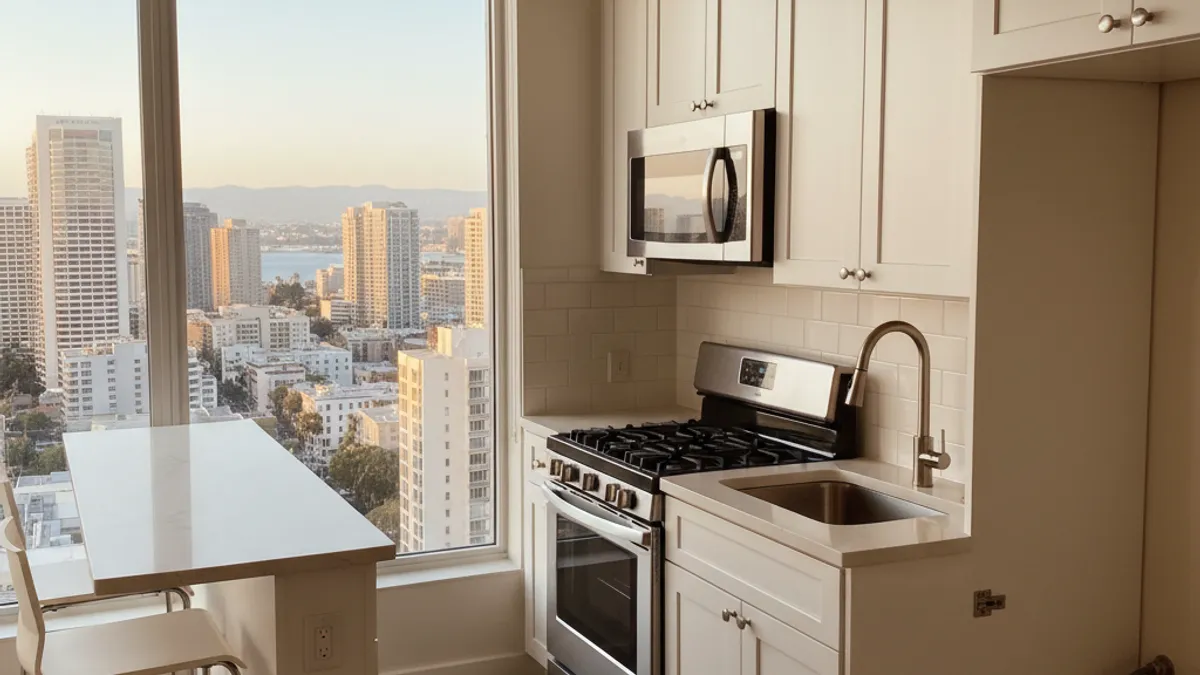
A small kitchen remodel is a measurement problem before it is a style problem. Square footage, door swings, and the path between the sink, range, and refrigerator decide more than a mood board. The ideas below are tests you can run in the actual room. They are not neighborhood types, and they are not a promise that one layout works in every San Diego condo or cottage.
If the room is a narrow two-run plan, our galley kitchen layout fixes guide covers that shape in more detail. This page stays with the whole small-kitchen decision: what to measure, what to mock up, and what to leave reversible until the drawings are honest.
Start with a measured worksheet
Walk the room with a tape measure and a notebook. Record inches, not rounded feet.
- Overall length and width of the floor, wall to wall.
- Every door, cased opening, and window, including the swing of each door.
- Ceiling height, soffits, and any bulkhead.
- Existing cabinet runs: length, depth, and height of bases and wall cabinets.
- The refrigerator, range, and dishwasher with doors and drawers fully open.
- The path you actually use with groceries, trash, and a second person in the room.
- Electrical panels, plumbing stacks, vents, and anything that looks structural. Label those as unknown until a licensed pro inspects them.
That list is the brief. A photo of someone else’s 90-square-foot kitchen does not replace it. Two rooms with the same footprint can disagree once appliance doors, a pantry swing, and a hallway are on the drawing.
Building permits may be required depending on the scope. For a property in the City of San Diego, contact Development Services or call 619-446-5000 about your specific project. Other San Diego County addresses use the authority that serves that property. Do not treat a blog as a permit decision, and do not treat a neighborhood name as proof that a wall is or is not load-bearing.
Mock it up before you buy cabinets
Tape is cheaper than a layout you cannot live with.
- Mark proposed cabinet depths and any island or peninsula on the floor.
- Place the actual stools, or boxes the same size, where people would sit.
- Open the refrigerator, oven, and dishwasher on the tape lines.
- Carry a laundry basket along the grocery path.
- Stand at the sink and turn to the range and the refrigerator. Notice whether you have to sidestep the tape.
If a path fails in tape, it will fail in plywood. Resize the island, drop it, or turn it into a peninsula before anyone orders boxes. Our kitchen island vs peninsula comparison is the next read when that choice is on the table. Our kitchen design service can connect you with a licensed local pro who will turn the measurements into a buildable plan.
Keep early changes reversible. Painter’s tape, cardboard appliance footprints, and a single open shelf held up with temporary brackets teach more than a rendering. Do not demolish a wall, order custom cabinets, or buy a compact appliance package until the mock-up and the product sheets agree.
Layout tests that earn their space
These are questions, not a ranked list of moves that “always” open a kitchen.
Island versus no island. An island needs walking room on every open side after cabinet depth, counter overhang, and seated stools are included. If the tape test leaves you shuffling sideways, skip the island. A peninsula, a rolling cart, or a longer wall run may be the honest plan.
Refrigerator on the main run versus off it. Moving the refrigerator to a perpendicular wall can free a stretch of counter, or it can dump the grocery path into a doorway. Draw both versions. Include the door arc and the water line if the unit is filtered.
Swinging door versus pocket door, barn door, or cased opening. A pantry or laundry door that swings into the cook’s path wastes floor that cabinets cannot use. The replacement has to clear the wall cavity, the header, and any adjacent cabinet. Confirm that with the pro before you count the floor as recovered.
Wall opening as an inspection item. Opening a wall between the kitchen and the living room can change how the room feels. It can also hide plumbing, ducts, wiring, or a load-bearing member. That is an inspection issue, not a guess from the age of the house or the name of the neighborhood. If the wall is in play, the remodeler should say how it will be verified, who stamps any structural work, and how finishes on both sides will be closed. Permits may be required. Contact the reviewing department for that address.
Compact appliances as a product match. A 24-inch range or an 18-inch dishwasher is a product decision. Read the installation sheet for width, height, ventilation, and clearances. Do not assume a condo, an ADU, or a cottage always needs a certain width. Measure the opening, then pick a model whose sheet matches it.
Storage tests
Storage is why many small kitchens feel smaller than their floor plan.
Drawers versus a door and a shelf. A deep drawer stack in a base cabinet makes pots and plates reachable without kneeling through a single door. It also costs more than a stock door box. Compare usable cubic space in the drawing, not the number of doors.
Wall cabinets to the ceiling versus a soffit. Filling the gap to the ceiling adds storage for items you rarely use. It also changes how the room reads and how the installer handles an uneven ceiling. Look at the actual ceiling line before you assume a flush run.
Corners. An upper or base corner can be a lazy Susan, a blind corner, a diagonal cabinet, or a shelf. Each one trades access for capacity. See corner cabinet solutions before you default to open shelves in the corner.
Toe-kick drawers. A shallow drawer in the toe space can hold sheet pans or a step stool if the cabinet line and the flooring allow it. It is a product and a construction detail, not a universal add-on.
Open shelves versus closed uppers. This is the choice that articles like to pick a winner for. Open shelves can make a wall feel lighter and put everyday dishes in reach. They also show every object, collect cooking film, and reduce closed storage. Closed cabinets hide clutter and eat visual space. Live with a temporary shelf for a week if you can. If you still want the look, limit it to one run and keep closed storage for the rest. That is a household test, not a rule against shelves and not a rule for them.
Light, color, and finishes as room tests
Bring samples into the kitchen. View them in morning and evening light, next to the counter and the floor you plan to keep.
- A continuous counter and a wall-to-wall backsplash can read as a longer horizontal line than a short backsplash with a separate upstand. That is a visual effect, not extra square footage.
- Under-cabinet lighting lights the work surface. Ask the electrician or remodeler which products, drivers, and switching belong in this cabinet run. We are not publishing a color-temperature rule.
- One reflective surface, such as a glass door or a glossier tile, can bounce light. A full mirrored wall is a different project. Test a sample at the actual viewing height.
None of these finishes fix a blocked path. Do the layout mock-up first.
What to put in the quote
A small kitchen still needs a complete written scope. Ask each licensed independent professional to list, at least:
- Measured existing conditions
- Proposed plan with appliance models and door swings
- Cabinets, counters, backsplash, and floor as separate lines
- Plumbing and electrical work described, not implied
- What happens if a wall, soffit, or unexpected cavity is opened
- Permit responsibility, if the reviewing department requires a permit
- Exclusions
We do not publish San Diego small-kitchen price bands or timing ranges. Those numbers vary with structure, finishes, and access. Compare like-for-like proposals. The small kitchen remodel page has a planning checklist. If a wall opening is part of the plan, the open concept kitchen page covers that scope.
Before you sign, verify the contractor on the CSLB License Check. License status is legal status, not a quality rating. California home-improvement contracts have a down-payment cap of $1,000 or 10% of the contract price, whichever is less, and a three-business-day cancellation right when the contract is not negotiated at the contractor’s place of business. Those rules are in Business and Professions Code 7159. Read the notices in the contract.
Call (858) 400-4623 with the measurements and the layout you taped. Modern Kitchen SD is a referral service. We will match you with a licensed independent kitchen remodeler. You contract and pay that professional directly.