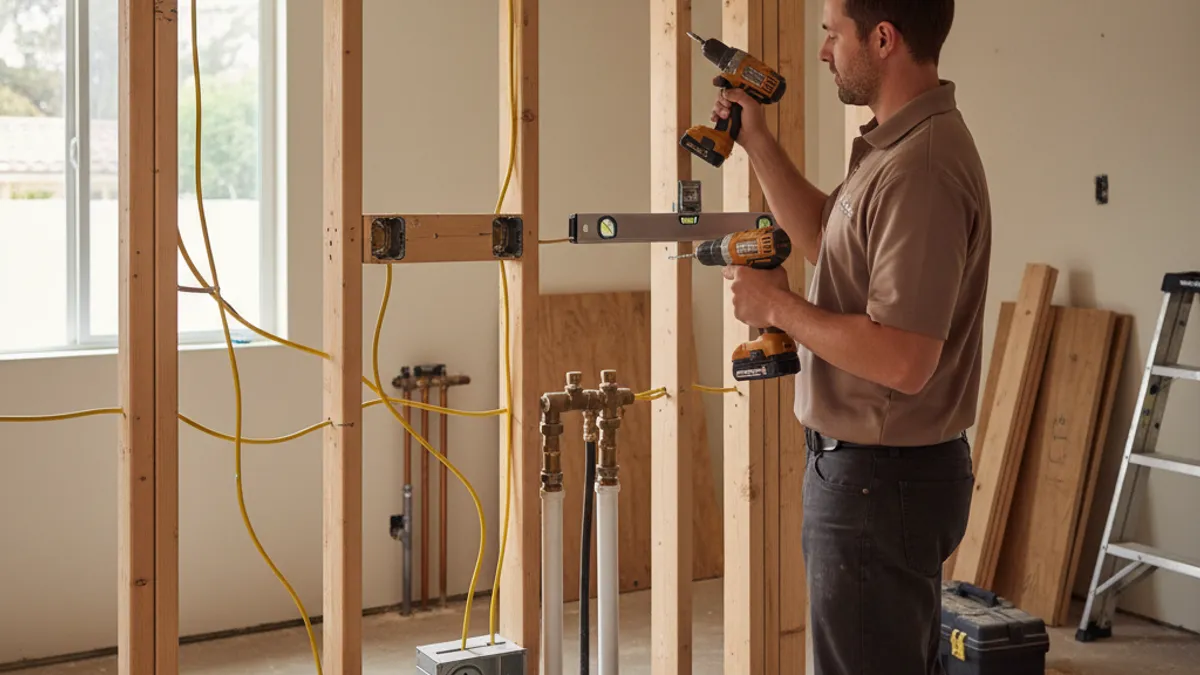
A kitchen plumbing remodel touches more of the project than most homeowners expect. Moving the sink for a new island, adding a dishwasher line, or running gas to a new range all look small on a floor plan. Behind the wall, each one can mean new supply lines, a new drain path, and a new vent decision. Get the plumbing scope wrong at the estimate, and it shows up later as a change order or a failed inspection.
We could not confirm San Diego plumbing price bands or a single citywide code checklist, so this page does not publish them. It stays with the physical decisions. For the permit side, see kitchen remodel permits in San Diego.
What a kitchen plumbing remodel actually moves
A sink relocation is the most common plumbing change, usually driven by an island or a layout that finally works. Hot and cold supply lines are the easier half. A licensed plumber can often reroute copper or PEX once the path is open.
The drain is the harder half. Every fixture needs a trap, and that trap needs a vent that the inspector at this address will accept. Move the sink too far from the existing stack and the plumber may need a new vent through the roof, a tie-in to an existing stack, or another method the local department allows. That vent decision, more than the length of pipe, is usually what separates a short move from an expensive one.
What to ask before anyone prices a sink move:
- How far is the new trap from the existing drain stack, and does the vent still work at that location?
- Does the vent tie into an existing stack, need a new roof penetration, or use another method this jurisdiction accepts?
- Is the kitchen on a slab or a raised foundation? Cutting concrete is its own scope and its own inspection question.
- What are the existing supply lines (copper, galvanized, PEX, or mixed), and will they be reused or replaced once the wall is open?
Do not compare two sink-move quotes until those answers match.
Adding a dishwasher, disposal, or second sink
Adding a fixture that was not there before is a different job than moving one that already exists. A new dishwasher needs a hot supply, a drain connection, and a way to keep dirty water from running backward. Ask the plumber how backflow protection will be handled at this address (air gap, high loop, or another method the inspector accepts). Do not copy a blog’s claim that one fitting is always required.
A garbage disposal adds a drain connection under the sink and, if it is new, an electrical connection. That is why disposal work often shows up as a joint plumbing-and-electrical line. See kitchen electrical code in California for the questions to ask the electrician.
A second sink, common in larger islands or butler’s pantries, needs its own trap and vent. “Just add a small prep sink” is rarely small once the vent run is mapped. Ask for that run on the drawing before you approve the island. The kitchen island design guide is the layout half of the same decision.
Running gas to a new range or cooktop
A gas line change is its own category. A licensed plumber or a specialty gas fitter should handle it, not a generalist who treats gas as a side task. Jumping to a larger range, adding a pot filler, or adding a second gas appliance can exceed what the existing line was sized to carry. Ask for a load calculation against the new BTU ratings, in writing, before the appliance is ordered.
Utility shutoff, pressure testing, and relight are not a blog schedule. Ask who notifies the utility that serves the address (often SDG&E in much of San Diego County), who is present for shutoff and restore, and how many working days to leave on the calendar. We could not confirm a standard SDG&E turnaround, so do not plan around a one-day promise from this page.
Building permits may be required depending on the gas, plumbing, or mechanical scope. Confirm with the contractor and the department that serves the address. City of San Diego: Development Services, 619-446-5000.
Why older San Diego homes complicate plumbing scope
San Diego housing runs from 1920s bungalows in North Park to 1970s ranches in Clairemont and El Cajon. The pipes behind the kitchen wall tell you which era you are in, but era is a clue, not a diagnosis.
Some older homes still have galvanized steel supply lines. Those pipes can corrode from the inside and restrict flow long before they fail in the open. Once a wall is opened, ask the plumber whether they recommend replacing the kitchen run instead of tying new fixtures into pipe they do not trust. That is an added line if they say yes. It is cheaper to decide while the wall is open than after a leak.
Some drain lines are still cast iron. Cast iron can last, and it can also take more labor and different fittings to branch than modern plastic. Ask what is actually in the wall before you treat a “short move” as short.
Coastal air is harder on exposed metal fittings than inland air. That is a reason for a plumber to look at the existing lines in Point Loma, Ocean Beach, or Del Mar before quoting a relocation. It is not a published corrosion rate. Inland cities such as La Mesa and El Cajon skip the salt air and can still have original galvanized runs. A kitchen remodel is often the first time those systems get a real look. Ask the plumber to flag aging pipe even if it sits just outside the drawing.
What to ask about a plumbing inspection
Do not assume every plumbing change in every city is inspected twice. Ask whether this scope needs a rough inspection before the wall closes and a final after fixtures are set. The permitting city sets that sequence.
Then ask what the inspector will look at so the plumber can build to it: trap and vent arrangement, drain slope, supply pressure test, dishwasher backflow protection, and any gas test. If a line fails, you want that news before drywall, not after the kitchen is finished.
We could not verify a single trap-to-vent distance, a required drain slope, or an AAV rule that applies in every San Diego County city. Those numbers belong to the adopted plumbing code and local amendments. Have the plumber cite the rule they are building to, or call the department.
What to ask before the plumbing scope is locked
A few questions catch surprises before they become change orders:
- Are the existing supply and drain lines being reused, or is the wall being opened to confirm what is back there?
- If the sink or island moves, does the vent tie into the existing stack, need a new roof penetration, or use another method this city accepts?
- Is the gas line sized for the new appliance, or does it need to be upsized?
- Who schedules any utility shutoff and restore if gas work is involved?
- Which inspections, if any, are required, and when are they called?
A crew that answers these before demo will not invent the drain path after the cabinets are in the truck. Our full kitchen remodel page covers how plumbing sits in the larger job.
Frequently asked questions
How much does it cost to move a kitchen sink?
We could not confirm a San Diego price band. Ask for a quote that states distance from the stack, vent method, foundation type, and whether supply lines are reused. The trap-to-vent problem, not the inches the sink travels, is usually what sets the work.
Do I need a permit to move a kitchen sink?
Building permits may be required depending on the scope. That is not a verified citywide “always” or “never,” and it is not automatically the same in every surrounding city. Confirm with the contractor and the building department for the address. City of San Diego: 619-446-5000. See the permit guide for how to ask.
Can I add a dishwasher where there wasn’t one before?
Often yes, if you can get a hot supply, a drain with backflow protection the inspector accepts, and the matching electrical. The work is simpler when the sink or disposal it ties into is nearby, and more involved when the new location is far from the existing drain.
Does a bigger gas range always need a bigger gas line?
Not always, but do not assume the old line is enough. A jump in burner load, or a second gas appliance, commonly exceeds what the existing pipe was sized to carry. A licensed plumber or gas fitter should calculate the load before the range is installed.
What happens if a plumber finds galvanized pipe behind the wall?
Ask whether they recommend replacement instead of a tie-in, and get that as a written line. Galvanized steel can corrode from the inside and restrict flow before it looks failed. Handling it while the wall is open is a scope decision, not a surprise invoice if you asked the question first.
Why does moving a sink sometimes require cutting into the roof?
Drains need a vent. If the new trap is too far from the existing stack for the method this city accepts, the plumber may run a new vent, which can mean a roof penetration. It is the decision that most often turns a “small move” into a larger one.
When to call us
Call when a sink, island, dishwasher, or gas range will change the pipes, not just the cabinet doors. Modern Kitchen SD is a referral service. We do not run plumbing or pull permits. Call us at (858) 400-4623 and we’ll connect you with a licensed local kitchen remodeler who can scope the plumbing before demo starts.